A Peek Into LOGEX's Approach to Innovation

LOGEX
5 min read
January 2026
A Peek Into LOGEX's Approach to Innovation
3:08

New business idea development (or product innovation) in healthcare technology often happens in one of two ways: it’s either driven by what’s technically possible (technology push) or by what customers are asking for (market pull). But how does this process actually work at LOGEX? 

We spoke with Pieter Krop, Head of Product Strategy & Marketing, to understand how LOGEX moves from identifying problems to delivering solutions that help hospitals balance quality care with financial sustainability. 

Can you walk us through how LOGEX approaches innovation? 

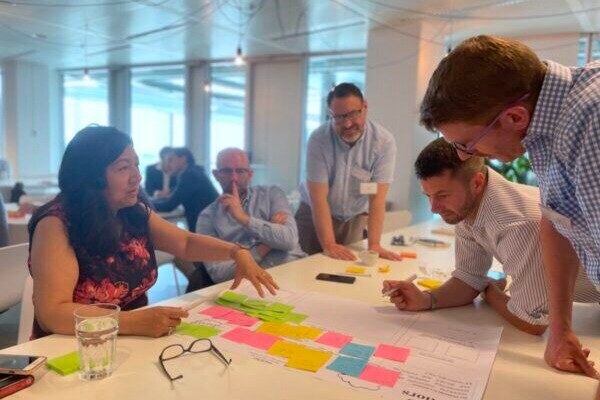
Typically - although other routes exist - the situation for us is ‘market pull’. Our Customer Office works hard to understand the practical challenges healthcare organisations face and talk to us about. We then build a minimum viable product that addresses the problem at hand. If the business value of these solutions is proven in a few pilots, we move forward to product development and create something scalable. Sometimes, we are the ones to see a new market challenge and decide to develop that idea. We validate it first with a few customers and then basically the same process kicks off as with the market-pull setting. This way we ensure that the jobs-to-be-done we uncover are valuable to the customer and can be translated into products that are relevant, urgent and scalable across geographies.  

How do you move from identifying challenges to building solutions? 

When recurring pain points emerge - such as unclear income streams, inefficient negotiations, or rigid budgeting processes - we validate them against our strategic priorities and strive to align them with market insights. Ideas are shaped through an iterative process: we test prototypes with customers, establish feedback loops and develop business cases. This ensures that each solution is grounded in real customer needs and delivers measurable value that the customer is genuinely interested in. To be fair; this process is in development and not yet fully institutionalised at LOGEX!

How do you decide where to invest resources? 

This is still a very new process at LOGEX and it is not yet where we want it to be. Under the right circumstances, we prioritise initiatives that combine ‘relevance of the problem’, ‘urgency of the problem’ and a ‘customer willingness to buy this from LOGEX’. In a nutshell, does this provide the customer with real value. Strategic product-fit to our existing portfolio is important here as well; we aim to leverage our existing customer base, architecture and datasets, and ensuring lightweight onboarding.

How does this connect to your product and marketing strategy? 

Our goal is to help healthcare strike the right balance between affordability, accessibility, and quality while keeping an eye out for technological innovations from the healthcare industry. Every product we create supports this goal by enabling the entire healthcare ecosystem to ensure the delivery of high-quality care while safeguarding financial health in an uncertain environment.

Putting this to practice –
three recent examples 

LOGEX Income: Transforming Revenue Management for NHS Trusts – launching a new module with customers in the UK. 

Customer Challenge 

NHS Trusts face increasing complexity in managing variable income under the evolving NHS Payment Scheme. With fee-for-service models gaining prominence, accurate invoicing and compliance with strict Data Landing Portal structures have become critical. Many Trusts struggle with fragmented data processes, manual data handling, and tight, monthly deadlines: issues that directly impact revenue recovery. 

How the Idea Started 

The concept for LOGEX Income was driven by customer feedback and market signals. Trusts highlighted inefficiencies and dependency on BI teams for data corrections. Combined with NHS reforms and the need for interoperability, this created a clear need for an integrated, cloud-based solution. 

What’s the job-to-be-done we help resolve 
LOGEX Income consolidates the entire income process - data collection, validation, NHS groupers, pricing, and reporting - into one platform. This eliminates system dependencies, reduces manual work, and ensures compliance with NHS standards. 

 Main goals of the product 

  • Cut customer time spent in half: about 50% less time spent on data preparation and validation thanks to automation. 
  • Time spent on errors reduced: Up to 30% fewer commissioner challenges, reducing rejected claims and disputes freeing up critical healthcare resources for other tasks. 
  • Better liquidity: Hundreds of thousands of pounds are safeguarded annually through improved accuracy and timely submissions. 
  • Lightweight onboarding: Implementation time cut from months to weeks with clear Project Implementation Plans, SaaS deployment and automatic updates. 

Customer Feedback & Next Steps 

Early adopters report improved control over deadlines and higher income recovery. Feedback emphasises the value of integrated analytics and monitoring, guiding enhancements such as expanded tariff benchmarking, forecasting and granular integration with other LOGEX modules. 

LOGEX Negotiation Model: Bringing Structure and Confidence to Price Negotiations – a proven case with the Ikazia hospital. 

Customer Challenge 

Dutch hospitals negotiate annually with insurers on prices and volumes, a process that determines budgets and care availability. These negotiations are complex, time-sensitive, and strategically critical. Without clear insights, hospitals risk financial setbacks and suboptimal agreements. Ikazia Hospital faced recurring challenges: heavy manual work, limited time, and insufficient transparency. 

How the Idea Started 

The LOGEX Negotiation Model was designed to address these pain points by making negotiations data-driven and structured. Hospitals needed a way to combine cost, volume, and tariff data into actionable scenarios, reducing guesswork and improving outcomes. 

What’s the job-to-be-done we help resolve 
The model integrates key functionalities: scenario management, tariff rules, benchmarking, audit trails, and direct export to insurer formats (Vecozo/ZI). By linking to hospital data, it enables accurate calculations and clear, reproducible workflows. Hospitals can simulate multiple scenarios and understand the impact of choices before entering negotiations.

 Main goals of the product 

Our solution helps the customer to arrive at the negotiations with better preparations: 

  • Significant time savings: What previously required weeks of manual preparation now takes days, saving time to think through the tactics beforehand. 
  • Improved accuracy: Automated calculations reduce errors and ensure compliance with insurer formats, helping the customer put forward a more realistic proposal.

  • Full traceability: Audit trails and structured workflows eliminate the “black box” effect, support constructive conversations at the negotiation table. 

Customer Feedback & Next Steps 

Ikazia reports major time savings and greater confidence in negotiations. “Thanks to clear scenarios, transparency, and direct integration with our data, we entered negotiations well-prepared. What used to be manual and stressful is now faster and delivers better results.” Hospitals adopting the model are shaping future enhancements, such as deeper benchmarking and integration with other LOGEX Financial Analytics tools.

LOGEX Budgeting & Forecasting: Driving Strategic Budgeting for German Hospitals – enabling data-driven decisions 

Customer Challenge 

German hospitals operate under increasing financial pressure due to rising costs, regulatory reforms, and structural changes like ambulatory care and Hybrid-DRGs. Budgeting processes are often fragmented, Excel-based, and lack transparency. Excel is error-prone and difficult to audit, making quality assurance challenging. For multi-site hospital groups, heterogeneity in data and absence of unified cost accounting make strategic planning even harder. Leadership needs reliable insights to prepare for reforms, simulate portfolio changes, and assess the impact on resources, economics, and long-term results.

How the Idea Started 

Hospitals sought a solution that could consolidate financial, personnel, and service planning into one platform, while integrating market and performance analytics. The goal: create a robust basis for strategic decisions, such as service line adjustments, and resource allocation, without adding complexity.

What’s the job-to-be-done we help resolve 
LOGEX Budgeting & Forecasting provides a single source of truth for budgeting and strategic planning. It automates complex calculations, integrates DRG volumes and staff planning, and enables real-time scenario management. Multi-user access with role-based permissions allows finance, HR, and clinical teams to work simultaneously. Hospitals can simulate the effects of portfolio changes (e.g., adding or removing service lines) on capacity, economics, and compliance with upcoming regulations like KHVVG. Built-in validation and audit trails ensure robust error detection, exceeding Excel capabilities.

 Main goals of the product 

  • Time saved: Budget creation can be reduced from weeks of manual consolidation to days.  
  • Increased traceability: Rule-based and data driven calculations and audit trails ensure compliance and reliability. 
  • Better collaboration: Multi-user capability and role-based access enable teams to contribute in parallel without version conflicts, supporting increased realism when setting the budget. 
  • Think through future scenario’s: Supports scenario planning for reforms, nursing budgets, and reimbursement negotiations. 

Customer Feedback & Next Steps 

Early adopters report greater confidence in strategic decisions and smoother, more coordinated budgeting cycles across departments. Next steps include expanding functionality for forecasting DRG volumes, and deeper integration with other LOGEX modules for comprehensive financial analytics.


Screenshot 2025-03-11 151950

Get the latest insights, industry trends, and updates on how LOGEX is transforming healthcare with data-driven solutions.

Subscribe to Our Newsletter