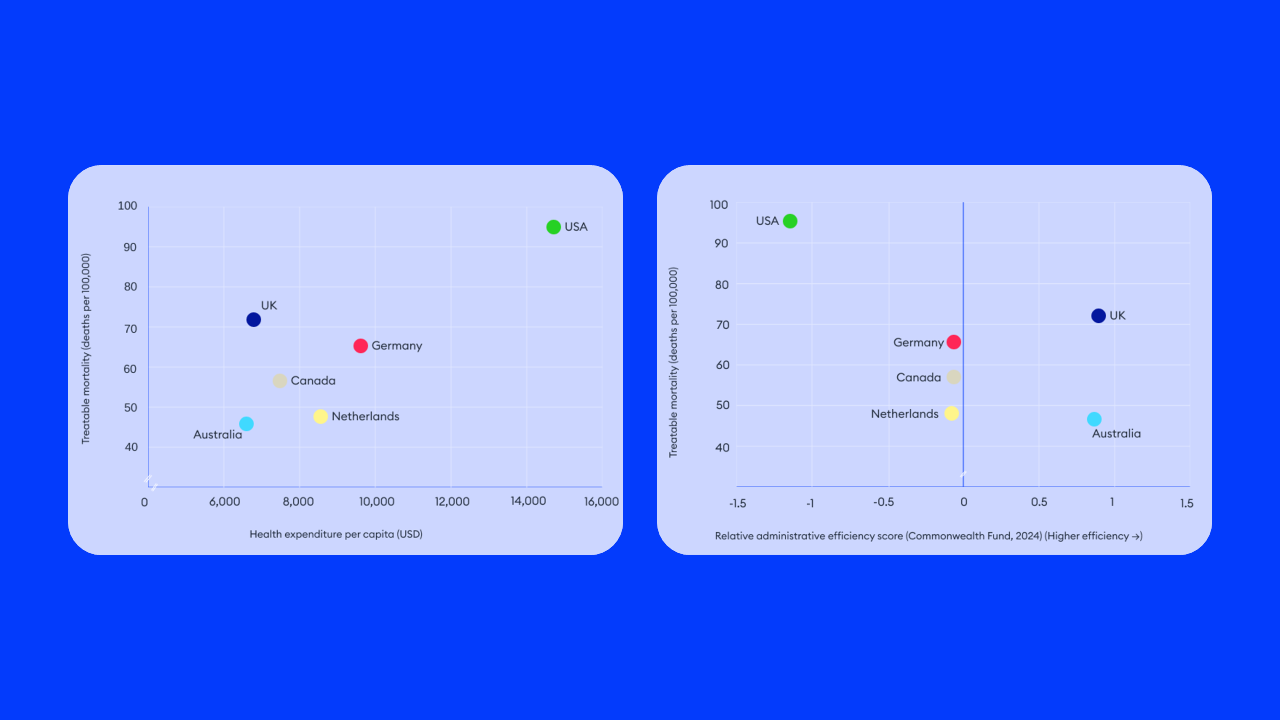
Healthcare systems are often evaluated using indicators such as health expenditure, administrative efficiency, and treatable mortality. Viewed together, these metrics tell a more nuanced story than any single measure can.
This infographic brings together three commonly used indicators across six high-income countries:
- Health expenditure per capita
- Administrative efficiency
- Treatable mortality
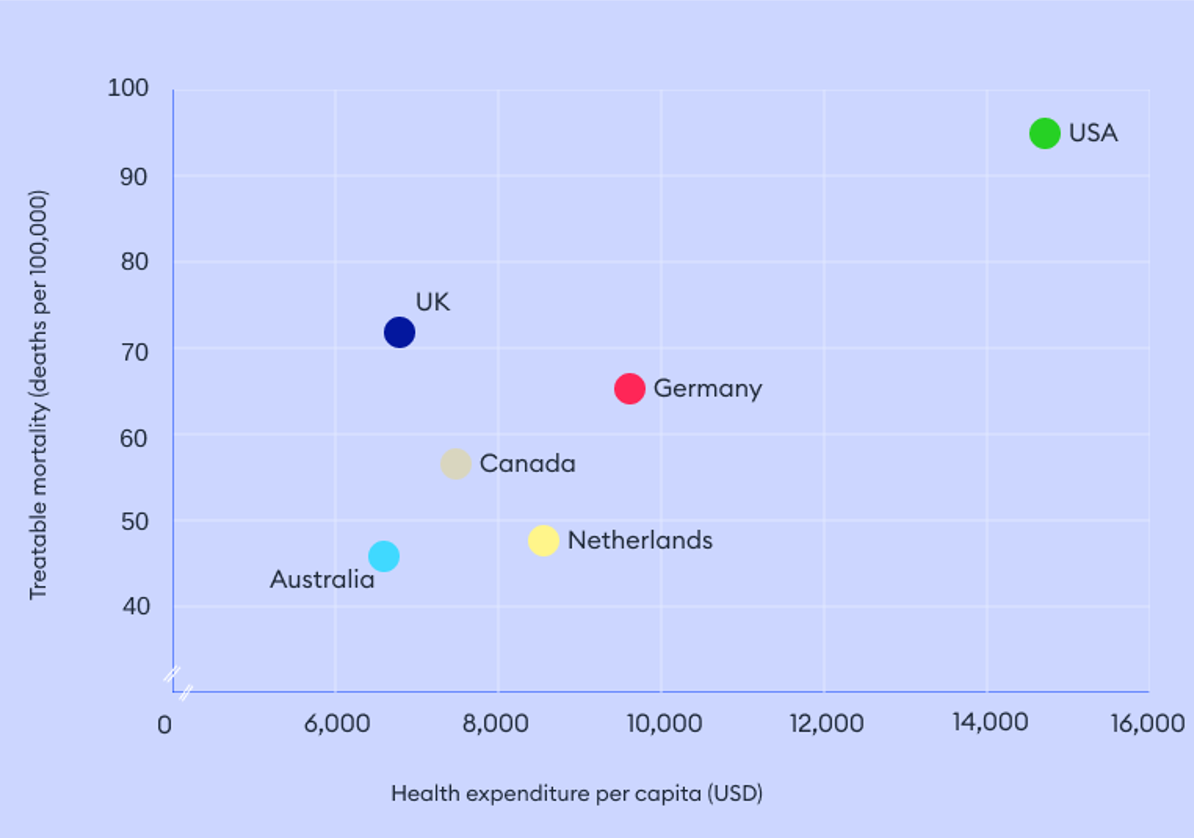
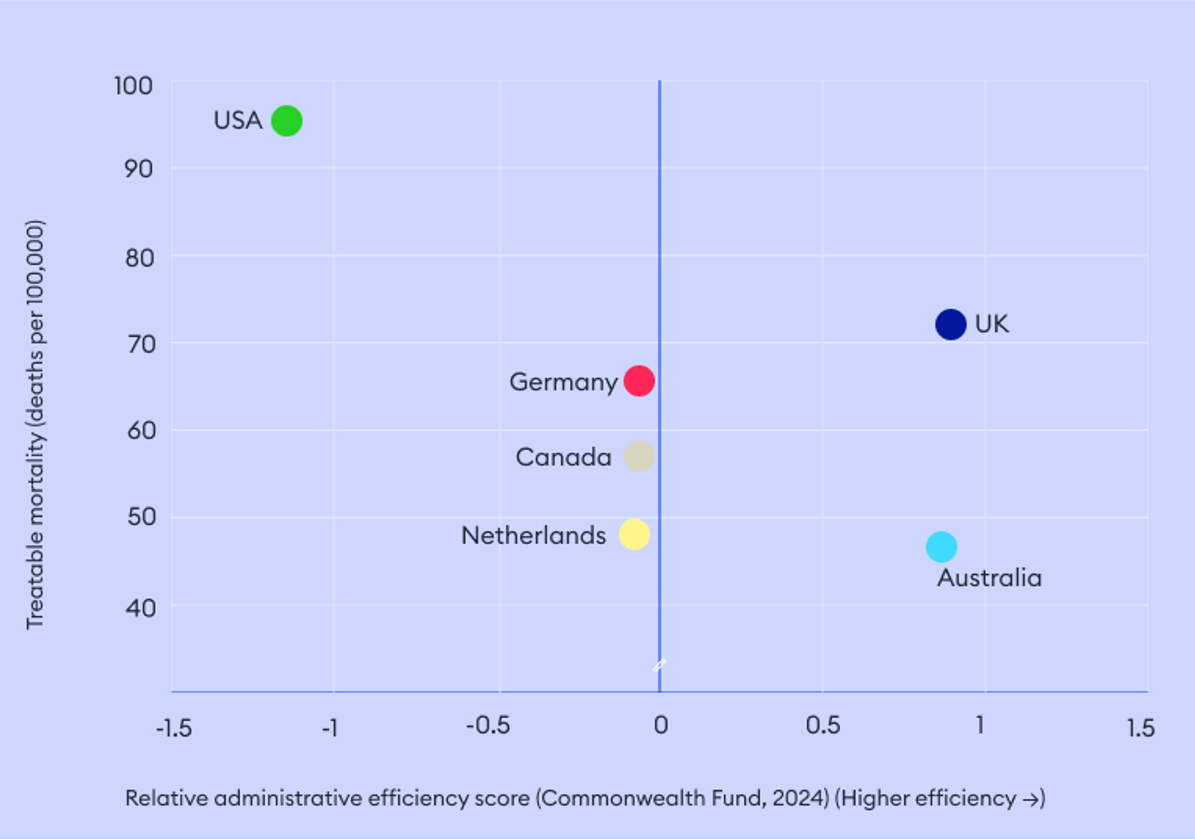
These data illustrate two distinct patterns. Higher spending does not appear to correspond consistently with lower treatable mortality: the USA spends far more per capita than any other country shown, yet has the highest mortality rate in this comparison. Administrative efficiency shows a somewhat closer alignment with lower mortality levels, though the relationship is modest and should not be overstated given the small number of countries included.
The UK represents an important exception worth examining directly. It scores relatively well on administrative efficiency yet has comparatively elevated treatable mortality. This may reflect system-level capacity constraints, including waiting times and workforce pressures, rather than administrative performance alone. It serves as a useful reminder that no single indicator captures the full picture of healthcare system performance.
Data from six may indicate a pattern, but do not yet establish a robust relationship, and the two data sources used here (OECD Health at a Glance 2025 and the Commonwealth Fund Mirror Mirror 2024) use different methodologies and periods. Expanding the analysis to a broader and more diverse set of systems would be needed to test whether these associations hold.
What the data do already suggest however, is that understanding how resources flow through a healthcare system - across patient pathways, clinical activity, and operational processes - matters alongside the question of how much is spent. And systems with better visibility into these dynamics are likely better placed to identify variation, act on it, and improve outcomes over time. We support that with ongoing analysis and benchmarking, allowing organisations to learn & improve over time. Feel free to visit our website to learn more about how we can help.