
- Press Overview
-
ESPID 2026: New Insights into the Burden and Prevention of Paediatric RTIs
ESPID 2026: New Insights into the Burden and Prevention of Paediatric RTIs
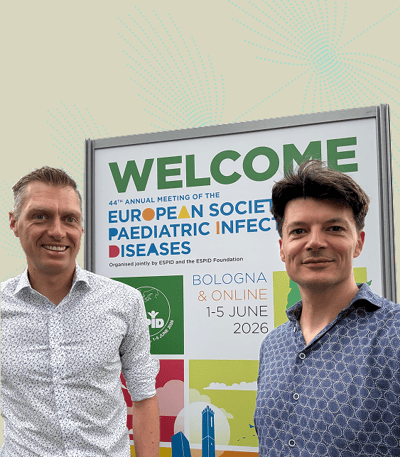
Respiratory tract infections (RTIs) remain one of the leading causes of hospitalisation in infants and young children. From RSV to pneumococcal infections, these diseases drive seasonal peaks, antibiotic use and long-term complications such as wheezing and asthma. Despite their scale, the full burden of paediatric RTIs is still not completely understood. This is partly due to underdiagnosis, differences in testing practices, and limited long-term data. At the same time, recent advances in preventive strategies offer promising opportunities to reduce disease burden and reshape the future landscape of paediatric respiratory care.
Against this backdrop, ESPID 2026 brings together researchers and clinicians from across the world to better understand how these infections evolve and how they can be prevented more effectively.
Key insights from ESPID 2026
This year’s sessions highlighted both the progress made and the ongoing complexity of studying paediatric RTIs, with a strong focus on generating stronger evidence on prevention and pathogen dynamics, increasingly informed by real-world outcomes.
RSV
A central theme throughout the congress was RSV prevention. Evidence from both clinical and real-world settings continues to show that interventions such as maternal vaccination and vaccination of newborns can significantly reduce infant hospitalisations and overall RTI burden. In addition, several studies are also observing lower rates of wheezing and asthma-related symptoms later in life, alongside evidence from one study suggesting reduced antibiotic use.
At the same time, discussions emphasised the need to better understand:
- how long protection lasts
- how timing of administration influences effectiveness
- how these benefits translate across different populations and seasons.
- what are the long-term effects of preventive strategies?
Pneumococcal disease
Pneumococcal disease was also a prominent focus at ESPID this year. Presentations highlighted how newer, broader‑coverage vaccines are changing which serotypes are most common. This shapes the future of disease prevention and monitoring.
This has important implications for colonisation patterns, disease severity, and antimicrobial resistance. This evolving picture reinforces the importance of continuous surveillance. Building on this, emerging findings presented at ESPID suggested interactions between RSV and Streptococcus pneumoniae. This raises the possibility that effective RSV prevention could also influence pneumococcal disease outcomes, although further research is needed to confirm this.
hMPV
Looking beyond these well‑studied pathogens, discussions on hMPV underscored both its documented impact and remaining gaps in our understanding. Existing evidence suggests that hMPV is a notable contributor to paediatric respiratory infections, including hospitalisations in young children. However, because its symptoms overlap with RSV and influenza, it is not always clear that hMPV is causing the RTI, therefore routine testing is needed. This implies that hMPV is likely underdiagnosed, and its true burden underestimated. Across sessions, speakers highlighted that improving diagnostic strategies is key to better quantify its impact, and to inform infection control and patient management.
Taken together, the sessions at ESPID showed that important insights are emerging, from effectiveness data to observed population-level impacts. However, there is still a need for more robust real-world evidence (RWE) on long-term outcomes, co-infections, and the implementation of preventive strategies across diverse healthcare settings.
Looking ahead: Strengthening evidence and prevention strategies
ESPID clearly demonstrated the value of bringing together insights from different countries, datasets, and clinical settings. It also highlighted the need to move beyond isolated studies towards more integrated approaches to respiratory disease prevention.
To better understand the burden of paediatric RTIs and the impact of prevention strategies, there is a growing need for RWE. This includes:
- tracking long-term outcomes
- understanding variation across populations, settings, and countries
- improving detection and attribution of respiratory pathogens
By analysing routinely collected real-world data (RWD), RWE provides a more accurate reflection of clinical practice. It enables clinicians, hospitals, and policymakers to assess outcomes across diverse populations, identify trends over time, and make more informed decisions. This is particularly important in paediatrics, where infants are difficult to study in clinical trials and where long-term follow-up is essential to understand the full impact of disease and prevention strategies.
More broadly, ESPID underscored the importance of integrated respiratory prevention strategies that combine vaccination, monoclonal antibodies, surveillance, and real-world effectiveness research. Strengthening the use of RWE will be key to connecting these elements and closing remaining knowledge gaps.
This is in line with LOGEX’s focus on supporting research that reflects clinical practice. Through our Healthcare Observatories, we enable secure data sharing and advanced analytics across hospitals, generating actionable insights that support better-informed decisions and improved outcomes across healthcare systems.
Want to learn more about the LOGEX RTI Observatory? Contact Femke Oldenziel.
Get clarity and control to make better decisions.
Do you have any questions about harnessing data-driven insights for better financial analytics or seek advice? Allow our experts, such as Sarah, to lead the way.
They will reply within 48 hours on business days.